Oct 20, 2025 | LLM (AI)
https://arxiv.org/pdf/2312.16171v1
Sondos Mahmoud Bsharat, Aidar Myrzakhan, Zhiqiang Shen iz
VILA Lab, Mohamed bin Zayed University of AI
Članek predstavlja 26 vodilnih načel, namenjenih poenostavitvi procesa promptinga za velike jezikovne modele LLaMA-1/2 (7B, 13B in 70B),
GPT-3.5/4.
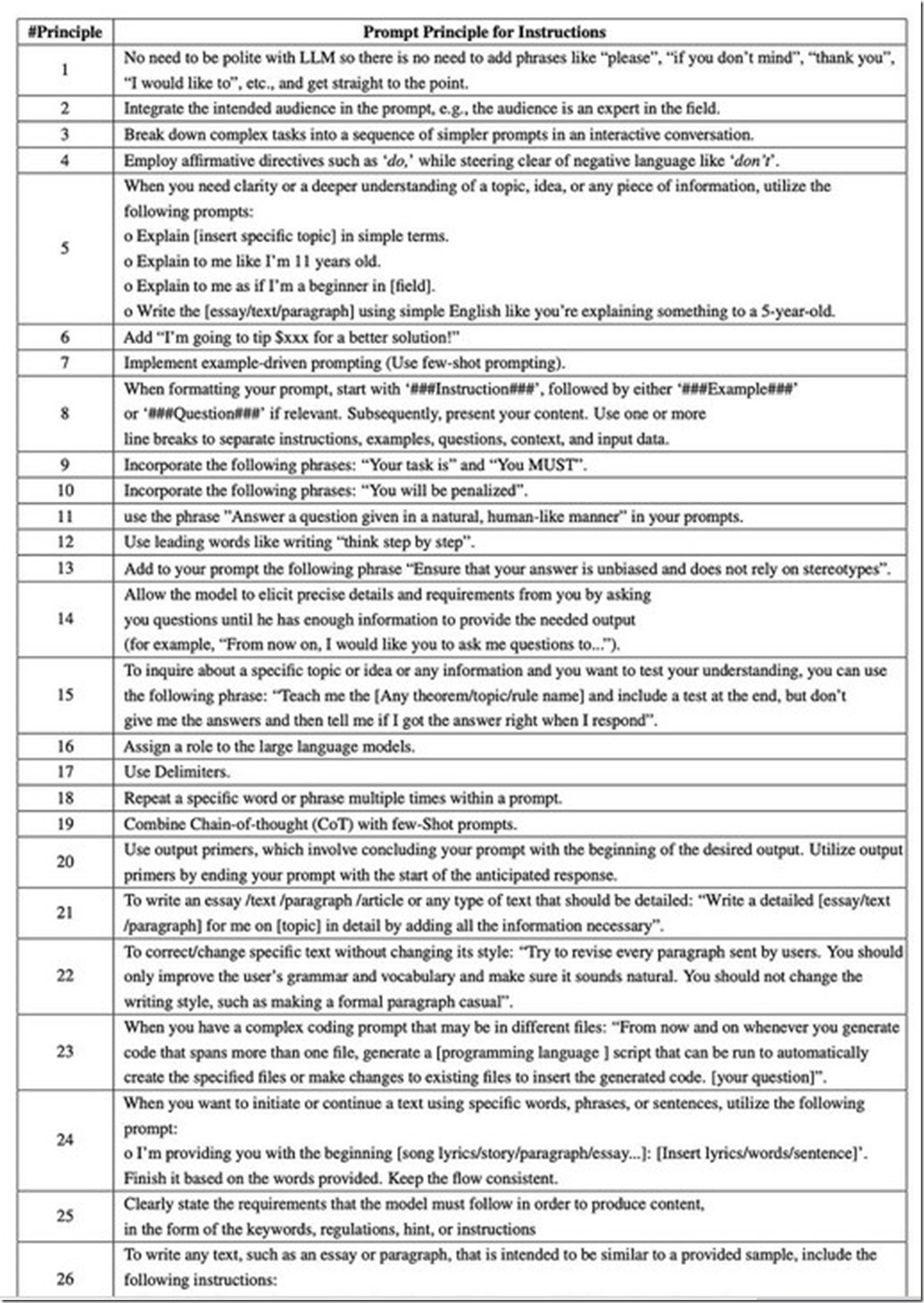
Še ista vsebina v obliki primerni za kopiranje pri sestavljanju vaših promptov (pozivov):
-
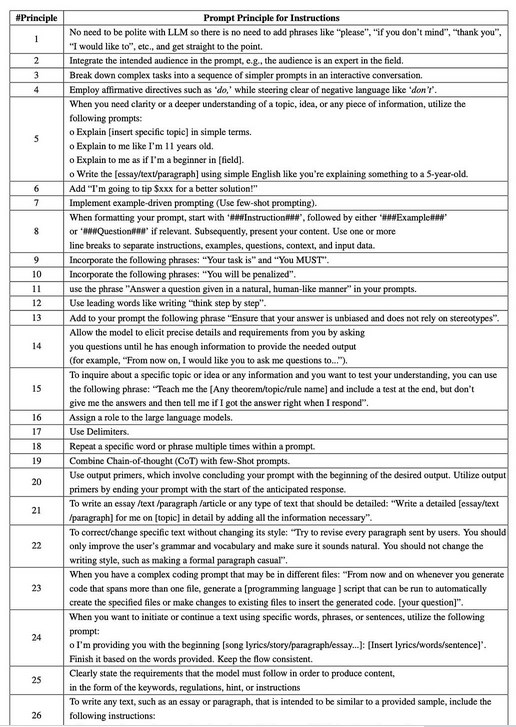
No need to be polite with LLM so there is no need to add phrases like “please”, “if you don’t mind”, “thank you”, “I would like to”, etc., and get straight to the point.
- Integrate the intended audience in the prompt, e.g., the audience is an expert in the field.
- Break down complex tasks into a sequence of simpler prompts in an interactive conversation.
- Employ affirmative directives such as ‘do,’ while steering clear of negative language like ‘don’t’.
- When you need clarity or a deeper understanding of a topic, idea, or any piece of information, utilize the following prompts:
o Explain [insert specific topic] in simple terms.
o Explain to me like I’m 11 years old.
o Explain to me as if I’m a beginner in [field].
o Write the [essay/text/paragraph] using simple English like you’re explaining something to a 5-year-old.
- Add “I’m going to tip $xxx for a better solution!”
- Implement example-driven prompting (Use few-shot prompting).
- When formatting your prompt, start with ‘###Instruction###’, followed by either ‘###Example###’ or ‘###Question###’ if relevant. Subsequently, present your content. Use one or more line breaks to separate instructions, examples, questions, context, and input data.
- Incorporate the following phrases: “Your task is” and “You MUST”.
- Incorporate the following phrases: “You will be penalized”.
- use the phrase ”Answer a question given in a natural, human-like manner” in your prompts.
- Use leading words like writing “think step by step”.
- Add to your prompt the following phrase “Ensure that your answer is unbiased and does not rely on stereotypes”.
- Allow the model to elicit precise details and requirements from you by asking you questions until he has enough information to provide the needed output (for example, “From now on, I would like you to ask me questions to…”).
- To inquire about a specific topic or idea or any information and you want to test your understanding, you can use the following phrase: “Teach me the [Any theorem/topic/rule name] and include a test at the end, but don’t give me the answers and then tell me if I got the answer right when I respond”.
- Assign a role to the large language models.
- Use Delimiters.
- Repeat a specific word or phrase multiple times within a prompt.
- Combine Chain-of-thought (CoT) with few-Shot prompts.
- Use output primers, which involve concluding your prompt with the beginning of the desired output. Utilize output primers by ending your prompt with the start of the anticipated response.
- To write an essay /text /paragraph /article or any type of text that should be detailed: “Write a detailed [essay/text /paragraph] for me on [topic] in detail by adding all the information necessary”.
- To correct/change specific text without changing its style: “Try to revise every paragraph sent by users. You should only improve the user’s grammar and vocabulary and make sure it sounds natural. You should not change the writing style, such as making a formal paragraph casual”.
- When you have a complex coding prompt that may be in different files: “From now and on whenever you generate code that spans more than one file, generate a [programming language ] script that can be run to automatically create the specified files or make changes to existing files to insert the generated code. [your question]”.
- When you want to initiate or continue a text using specific words, phrases, or sentences, utilize the following prompt:
o I’m providing you with the beginning [song lyrics/story/paragraph/essay…]: [Insert lyrics/words/sentence]’.
Finish it based on the words provided. Keep the flow consistent.
- Clearly state the requirements that the model must follow in order to produce content, in the form of the keywords, regulations, hint, or instructions
- To write any text, such as an essay or paragraph, that is intended to be similar to a provided sample, include the following instructions:
o Please use the same language based on the provided paragraph[/title/text /essay/answer].
Oct 20, 2025 | LLM (AI)
vir: https://www.arxiv.org/pdf/2510.04950
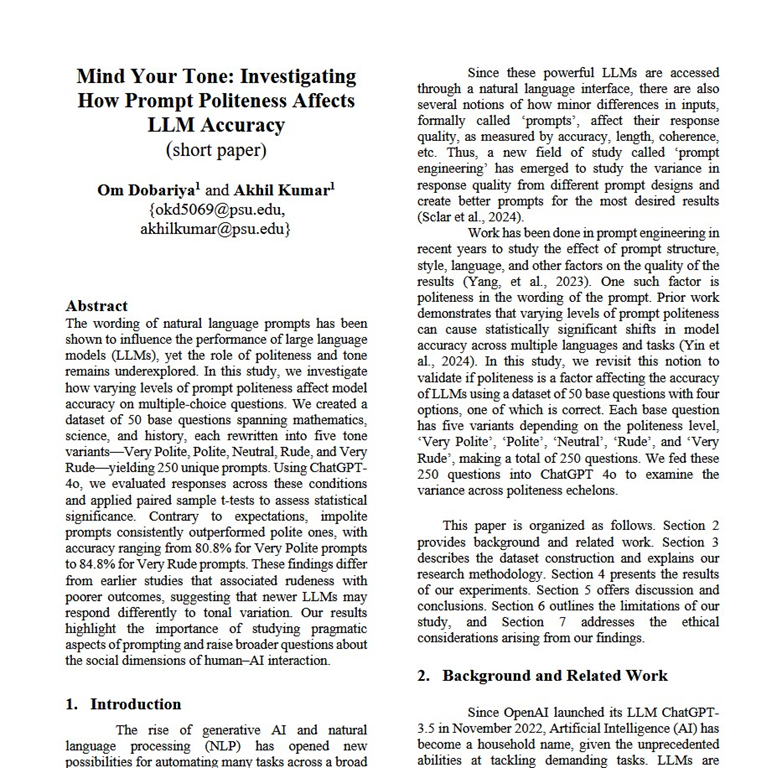
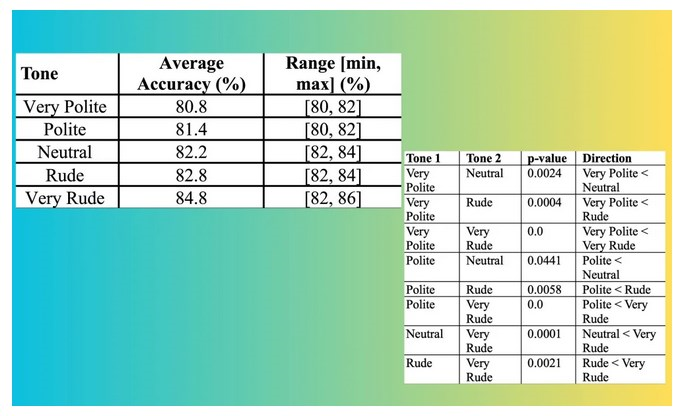
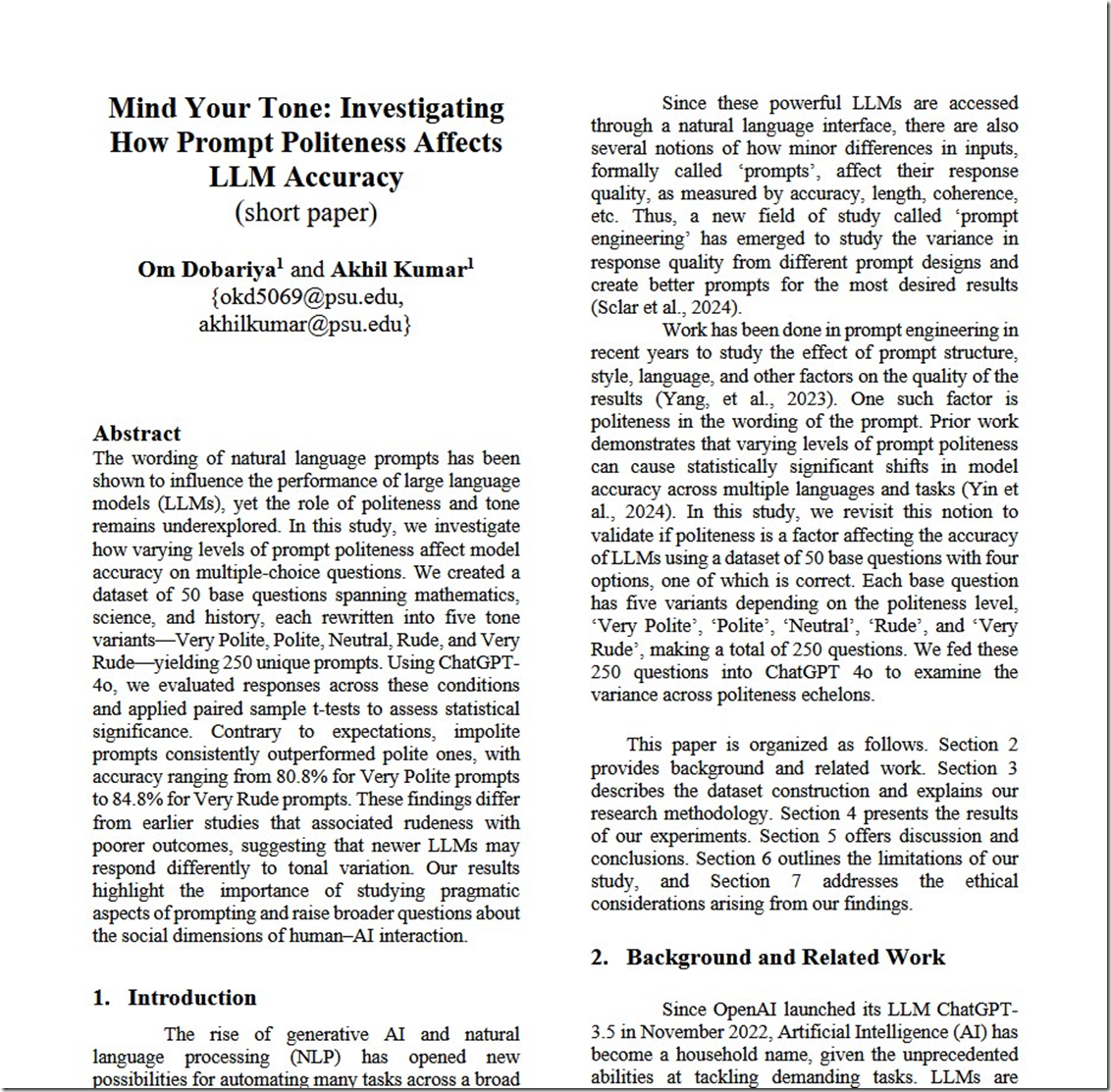
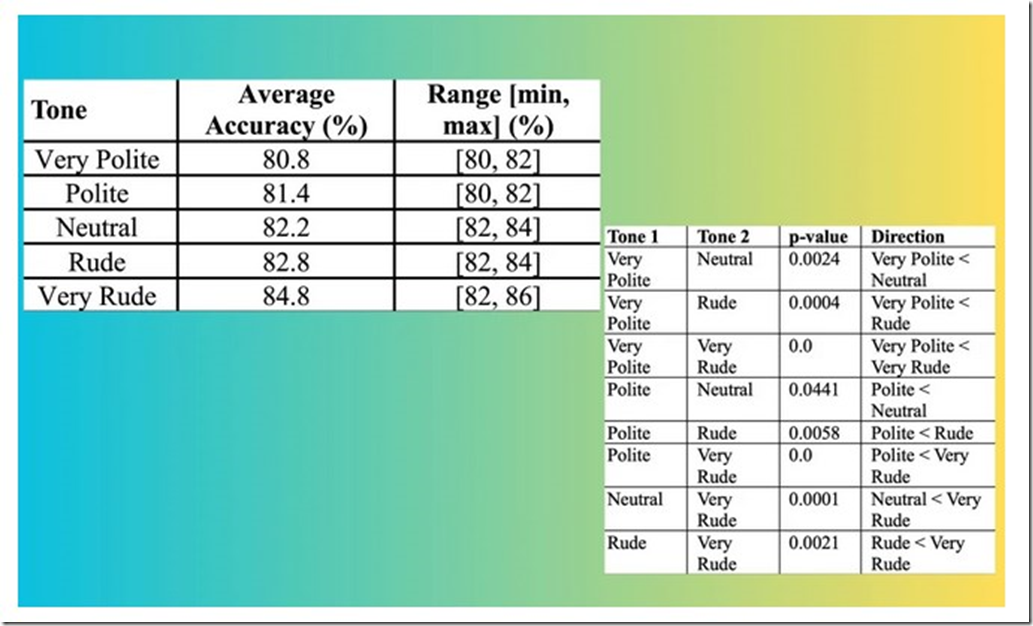
Penn State researchers je v svoji raziskavi ugotovil da če ste do ChatGPT nesramni, je ta za 5 % natančnejši kot če ste vljudni.
Preizkusili so 250 vprašanj. Nesramnost je dosledno presegala vljudnost za do 5 %.
Prekomerna vljudnost je v promptingu ena od pogostih napak in je zapravljanje žetonov – tokenov (kot »headspace« za AI).
Še nekaj pogostih napak v promptingu:
✦ Namera (intent).
Nerazumljivost naloge.
Preskočitev ciljne skupine, cilja ali merila uspešnosti.
Sprememba zahteve med navodili.
Zahteva po neznanih prihodnjih dejstvih. Ignoriranje varnosti, pristranskosti ali konteksta
Prositi za kompleksno delo v enem samem promptu
✦ Struktura.
Preskočiti definiranje izhodnega formata
Preskočiti omejitve dolžine
Ne navesti dovoljena orodja ali vire
Ne navesti, česa se je treba izogibati
✦ Besedilo.
Biti pretirano vljudni ali začenjati prompt z malim pogovorom pred nalogo Dvoumnost ali uporaba negativnih stavkov, kot je „ne stori tega“
Navajati omejitev v sredini ali proti koncu prompta
Dodajanje nepomembnih podrobnosti in povzročanje prekomernega števila znakov v promptu
✦ Podatki in ločevalniki.
Mešanje navodil z vstavljenimi podatki
Dodajanje preveč ali nepomembnih primerov
Oct 20, 2025 | AI SAS
-
Z novimi funkcijami Copilot Vision in Copilot Voice lahko uporabniki sprašujejo, prejemajo pomoč in izvajajo dejanja z naravnim jezikom.
-
Ukaz “Hey Copilot” omogoča pogovor z računalnikom brez klikanja – podobno kot z osebnim asistentom.
-
Agentne funkcije omogočajo, da Copilot sam izvaja naloge, kot so urejanje datotek ali ustvarjanje spletnih strani.
-
Gaming Copilot ponuja nasvete v živo med igranjem iger, najprej na napravah Xbox ROG Ally.
-
Orodja, kot je Manus, lahko z enim ukazom zgradijo spletno stran iz uporabniških datotek.
Gre za zgodovinski premik v načinu uporabe računalnika – od ukazne vrstice do namizja, od namizja do mobilnega, zdaj pa v inteligentno agentno obdobje, kjer je umetna inteligenca neposredno vpeta v vsakdanje delo uporabnikov.
Oct 20, 2025 | LLM (AI)
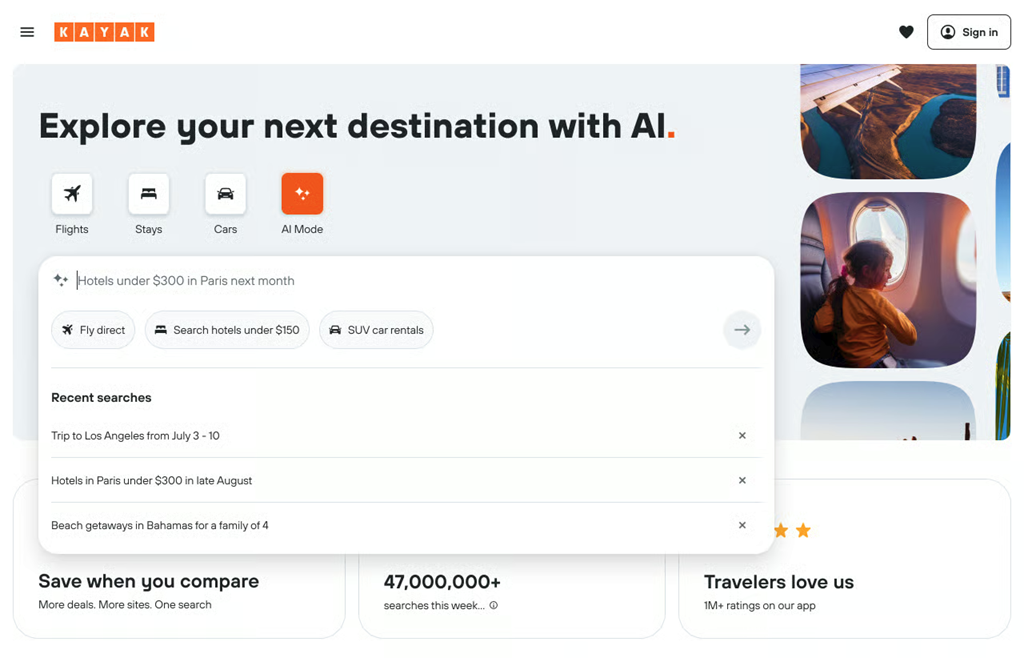
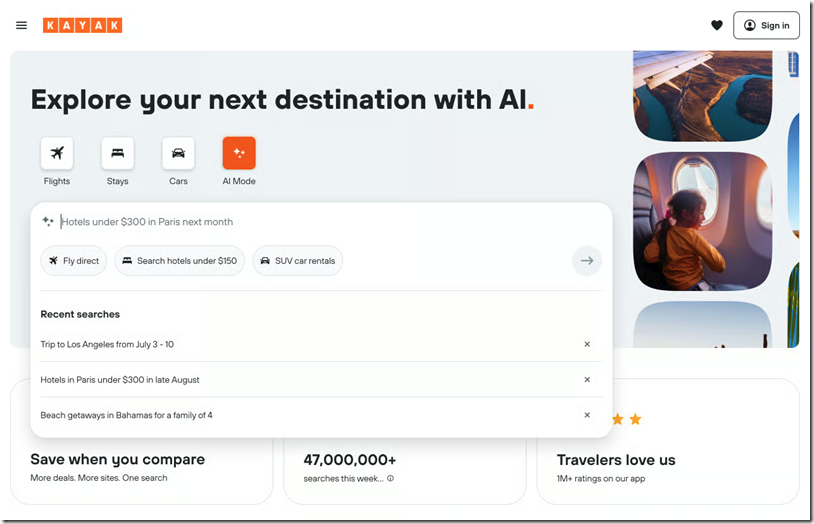
Kayak je predstavil svoj novi način z umetno inteligenco (AI Mode), ki bo bistveno olajšal načrtovanje potovanj.
-
Kayak je uvedel AI mode, ki uporabnikom pomaga raziskovati, primerjati in rezervirati potovanja.
-
Uporabniki lahko postavljajo odprta vprašanja, kot na primer »Kje naj praznujem novo leto?«
-
Klepetalnik obravnava lete, hotele, najem vozil in primerjave cen v realnem času.
-
Deluje na osnovi ChatGPT-ja, vendar je neposredno vgrajen v glavno stran Kayaka.
-
Gre za nadgradnjo njihove prejšnje testne AI-platforme, ki so jo zagnali aprila.
-
Namenjen je predvsem uporabnikom v zgodnji fazi načrtovanja, ki še ne vedo, kam bi potovali.
-
V kratkem prihajajo glasovna podpora in večjezična razširitev po svetu.
Oct 16, 2025 | LLM (AI)
Anthropic je pravkar predstavil Claude Haiku 4.5, pomembno posodobitev svojega osnovnega oz. najmanjšega LMM modela.
Razvit je bil za hitrost, stroškovno učinkovitost in vzporedno uvajanje, zdaj pa je privzeta nastavitev za vse brezplačne uporabnike Claude. In njegova zmogljivost je precej večja od njegove velikosti.
Haiku 4.5 dosega podobne rezultate kot Sonnet 4 in GPT-5 na ključnih merilih, pri čemer stane tretjino manj in je več kot dvakrat hitrejši. Na SWE-Bench je dosegel 73 % in na Terminal-Bench 41 %, kar ga naredi konkurenčno izbiro za naloge s kodo in ukazno vrstico.
Anthropic vidi Haiku 4.5 kot idealnega za »orodjarne agentov«, kjer hitrejši podagenti opravljajo naloge pod pametnejšim načrtovalcem, kot je Sonnet.
Njegova lahka arhitektura omogoča masovno vzporedno uvajanje, kar ga naredi primernega za proizvodna okolja velikega obsega. Orodja za razvoj programske opreme so prvi večji primer uporabe, pri čemer se pričakuje, da bo Anthropicov Claude Code imel koristi od manjše zakasnitve.
Haiku 4.5 je pameten strateški korak. Ne zahteva vsaka naloga umetne inteligence z 200-milijardnim vložkom. S poudarkom na hitrosti, stroških in usklajevanju Anthropic stavi, da prihodnost umetne inteligence ni le v pametnejših modelih, ampak v tem, kako jih uporabljate skupaj.
Oct 15, 2025 | Pozivi (prompti)
https://cookbook.openai.com/examples/sora/sora2_prompting_guide
Primer referenčnega prompta za generiranje videa:
Format & Look
Duration 4s; 180° shutter; digital capture emulating 65 mm photochemical contrast; fine grain; subtle halation on speculars; no gate weave.

Lenses & Filtration
32 mm / 50 mm spherical primes; Black Pro-Mist 1/4; slight CPL rotation to manage glass reflections on train windows.

Grade / Palette
Highlights: clean morning sunlight with amber lift.
Mids: balanced neutrals with slight teal cast in shadows.
Blacks: soft, neutral with mild lift for haze retention.

Lighting & Atmosphere
Natural sunlight from camera left, low angle (07:30 AM).
Bounce: 4×4 ultrabounce silver from trackside.
Negative fill from opposite wall.
Practical: sodium platform lights on dim fade.
Atmos: gentle mist; train exhaust drift through light beam.

Location & Framing
Urban commuter platform, dawn.
Foreground: yellow safety line, coffee cup on bench.
Midground: waiting passengers silhouetted in haze.
Background: arriving train braking to a stop.
Avoid signage or corporate branding.

Wardrobe / Props / Extras
Main subject: mid-30s traveler, navy coat, backpack slung on one shoulder, holding phone loosely at side.
Extras: commuters in muted tones; one cyclist pushing bike.
Props: paper coffee cup, rolling luggage, LED departure board (generic destinations).

Sound
Diegetic only: faint rail screech, train brakes hiss, distant announcement muffled (-20 LUFS), low ambient hum.
Footsteps and paper rustle; no score or added foley.

Optimized Shot List (2 shots / 4 s total)

0.00–2.40 — “Arrival Drift” (32 mm, shoulder-mounted slow dolly left)
Camera slides past platform signage edge; shallow focus reveals traveler mid-frame looking down tracks. Morning light blooms across lens; train headlights flare softly through mist. Purpose: establish setting and tone, hint anticipation.

2.40–4.00 — “Turn and Pause” (50 mm, slow arc in)
Cut to tighter over-shoulder arc as train halts; traveler turns slightly toward camera, catching sunlight rim across cheek and phone screen reflection. Eyes flick up toward something unseen. Purpose: create human focal moment with minimal motion.

Camera Notes (Why It Reads)
Keep eyeline low and close to lens axis for intimacy.
Allow micro flares from train glass as aesthetic texture.
Preserve subtle handheld imperfection for realism.
Do not break silhouette clarity with overexposed flare; retain skin highlight roll-off.

Finishing
Fine-grain overlay with mild chroma noise for realism; restrained halation on practicals; warm-cool LUT for morning split tone.
Mix: prioritize train and ambient detail over footstep transients.
Poster frame: traveler mid-turn, golden rim light, arriving train soft-focus in background haze.